My latest piece from the ceramics studio. There definitely seems to be a lot of cute owl motifs around at the moment. So jumping on the band wagon, I've painted a child's mug with little owls on a branch.
Recently, I was asked to help out with a project. This wonderful blanket (designed by Debbie Abrahams from her book, Blanket and Throws to Knit ) was knitted by Ann. I was asked to piece it together and back it. The finished blanket is being used to raise money for When you Wish Upon a Star. The yarn was donated by A Good Yarn and the fabric and cotton by L & C Fabrics . I thought I’d show you how I went about backing the blanket, I went about it as I would a quilt. Though, I decided tying would be the best way of layering it together, as traditional quilting would be difficult on a knitted fabric. 1. Block the blanket. I pinned it out and spritzed it. Normally, I would wet block, but I was concerned that the red may bleed and it would take some time to dry too. 2. My blanket was too large for a standard width so I pieced the backing. The backing should be a few inches larger than the knitted blanket. Place it right side down on the floor. I then tape it down o...
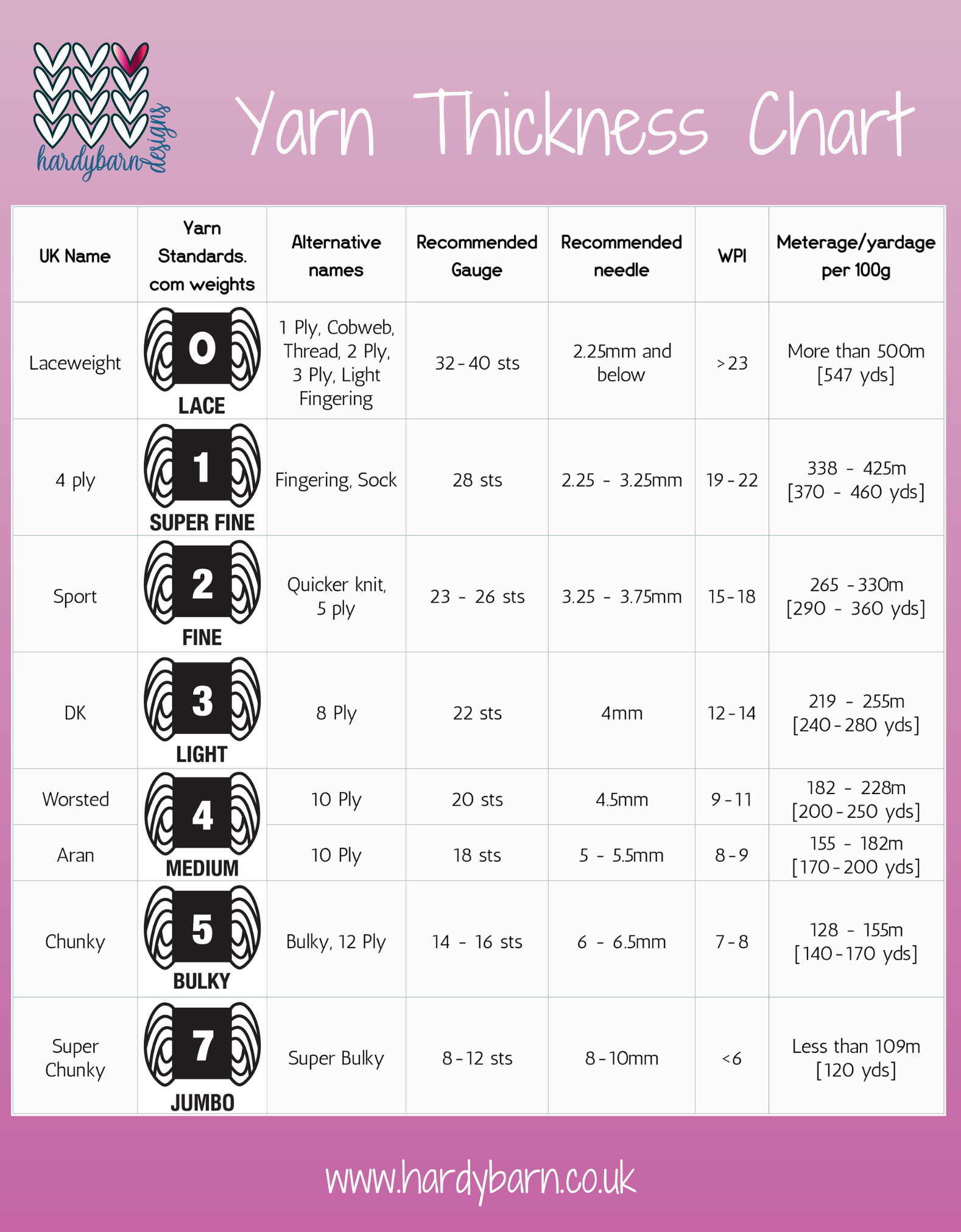
So you’ve chosen your pattern, but either you don’t want to use the recommended yarn or you can’t find it to buy. This does not mean you are stuck. Many knitters, especially when they are just learning to knit, get stuck on the idea that you can only use the yarn that the pattern is written with. There are, occasionally, a few projects where it can be quite hard to find an alternative but that is very rare. There are a few factors that you want to think about when changing yarn. Yarn Thickness The main one is the thickness of the yarn. This is the one factor that you absolutely have to consider. Everything else that I discuss below helps to hone your decision down but yarn thickness is at the core of a project. If you use a thicker yarn, it could make the fabric too dense and often make it impossible to match the gauge of the pattern. If you use a thinner yarn, then it will be more open and airy than intended; there’s more scope with this but some projects such as toys an...
I love the African Flower motif and suddenly just had the desire to make a bag for my knitting. Took a bit of playing around to figure out how to make the shape I wanted. I wanted a bucket shaped bag. I ended up breaking the shapes down - I made a tube from the hexagons and then a circle for the base. I used half hexagons to give the tube a straight edge. I used Littleberry’s half hexagon pattern - though I restarted the yarn on the right hand side every round. I used the magic circle technique for the centres and crocheted over the ends of the yarn and connected the hexagons as I went. I managed to find some fabric in my stash that matched the colours of the cotton and used this for the lining. I made twisted cord from the cotton for the drawstring. There was a bit of yarn leftover so I made a little drawstring pouch for my stitch markers. Bag Construction Make a tube with the hexagons, eight across and 4 high. Make 8 half hexagons for th...



Comments
Post a Comment